Blue Period, Bakuman and a New Way to Look at Our Careers

Blue Period
Over the last few weeks I have been reading a work whose Netflix adaptation touched me more than it should have: Blue Period.
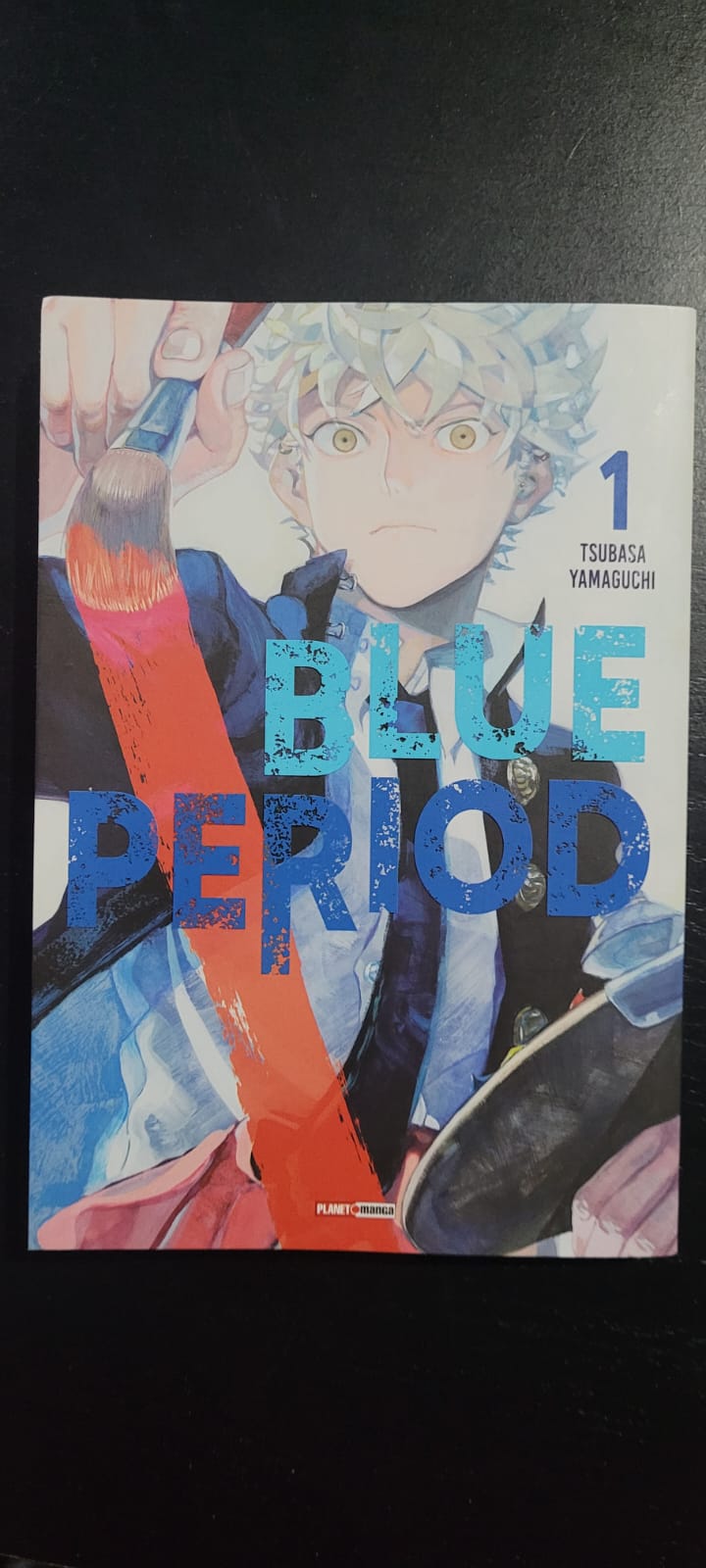
Tsubasa Yamaguchi’s manga tells the story of Yatora Yaguchi, a Japanese high school delinquent who, counterintuitively, gets high grades and, socially, feels he needs to wear a mask to be cool with his friends when he is around them, going as far as smoking and staying up all night so they feel good.
In his words: “For a while now, I’ve realized that things like raising my grades or getting along with people… are about as fun as completing an RPG quest. To achieve them, I put in much more effort than everyone else and then all I get are results, nothing beyond that.”

Until, in short, he has to draw his favorite landscape in his art class, a class he used strategically just for sleeping, and through a series of encounters with artistic expression, he decides to paint the blue dawn sky of Shibuya. And then this happens:
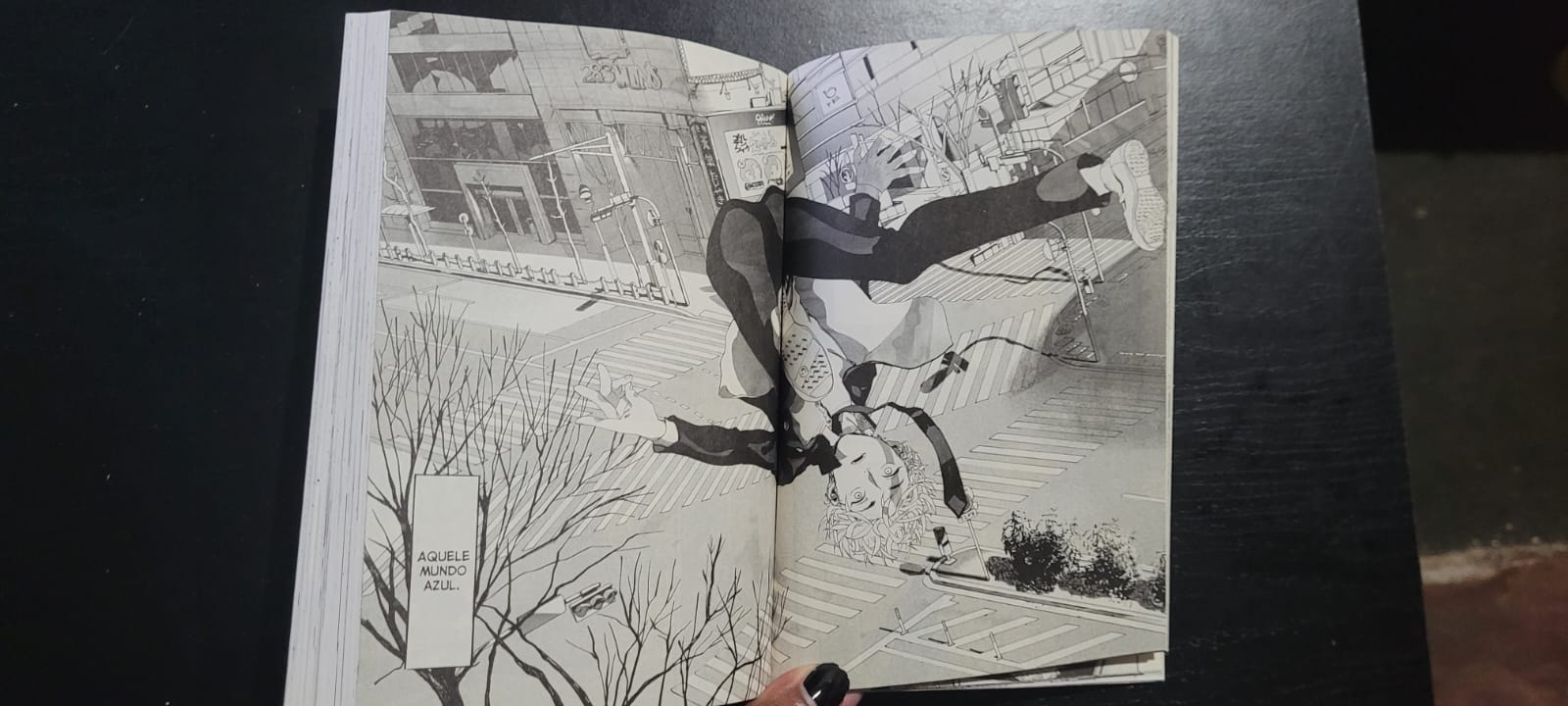
By connecting with the piece he painted, and with people recognizing his work as art, he cries and reflects: “Art is really fun. It’s a language that doesn’t use words. For the first time in my life, I felt I managed to connect with someone.”
And from that, he decides to chase becoming an artist and, for that, he has to pass the entrance exam of the only public art university in Japan. Because any other university would be too expensive for his parents.
The funniest part is that, in the second chapter, when he asks the art teacher how to secure an art career, besides delivering several criticisms of the current system, like “there are no job guarantees in a regular college, and in the freelance world art people already have the initiative”, she says an extremely blunt line: “Besides, thinking that way is typically adult thinking, don’t you think?”
Young people should do what they are passionate about, instead of thinking about responsibilities.
Bakuman
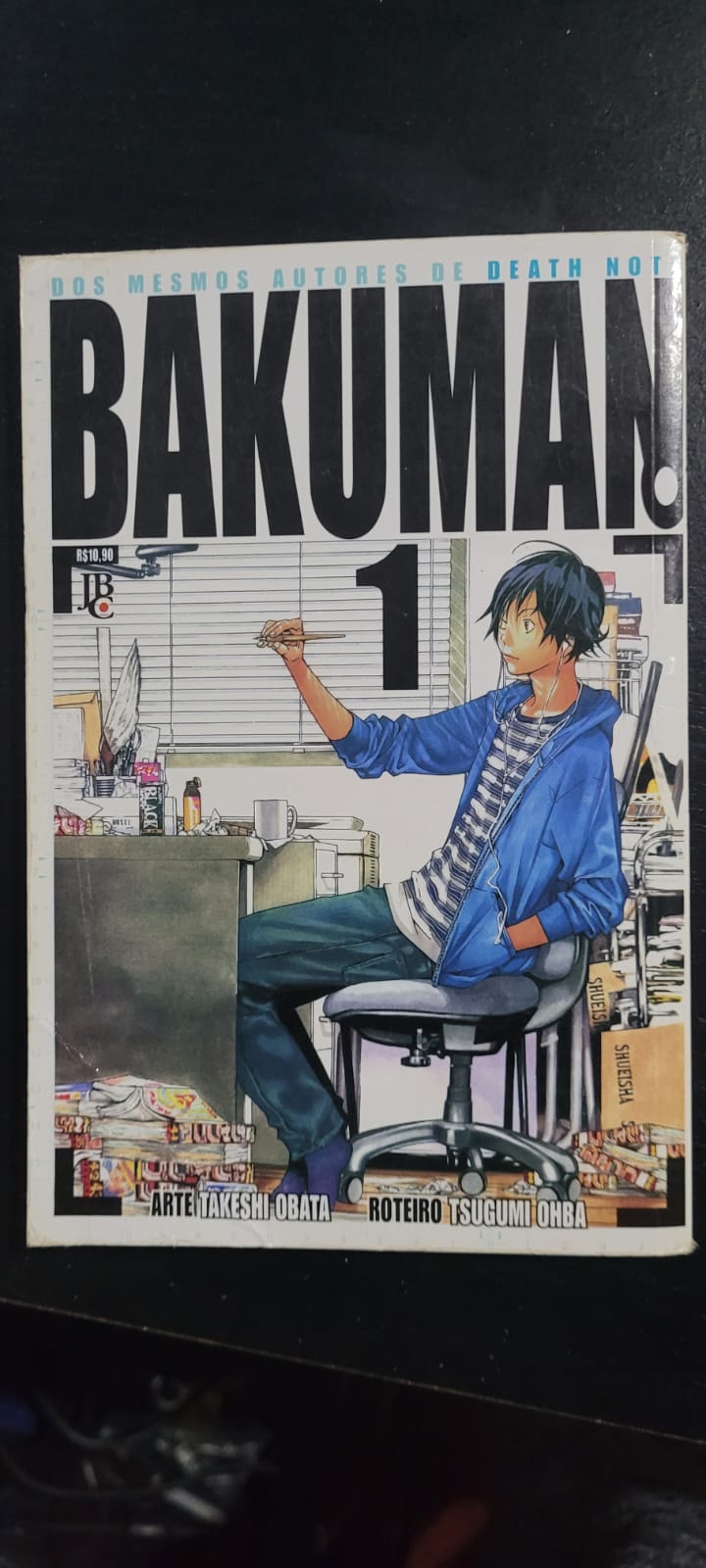
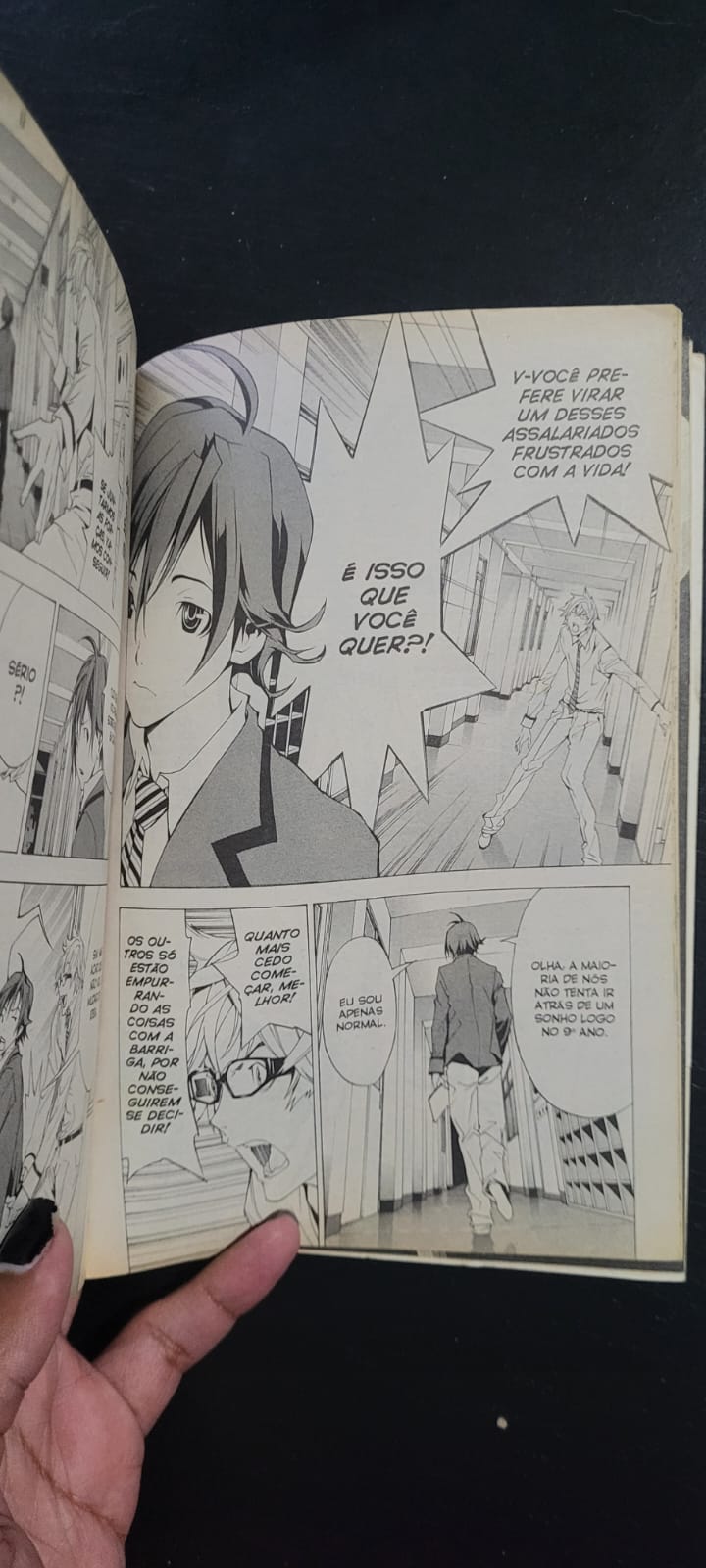
That reminded me of another work: Bakuman, also connected to art, made by the same authors of the acclaimed Death Note, about two teenagers who decide to follow the dream and enter the cruel manga industry where, in the first chapters, the more skeptical of the two refuses to follow the dream because of his uncle’s previous experience, a man who drowned in debt and ended up dying from overwork. His future creative partner confronts him: “You’re only in 9th grade. Thinking like that, you won’t chase your dreams, you’ll just end up in a job you hate!”
What pulls the character out of that inertia is his romantic interest, and how that romance resonates with the story of his late uncle, giving him a new perspective on the concept of chasing your dreams.
The title
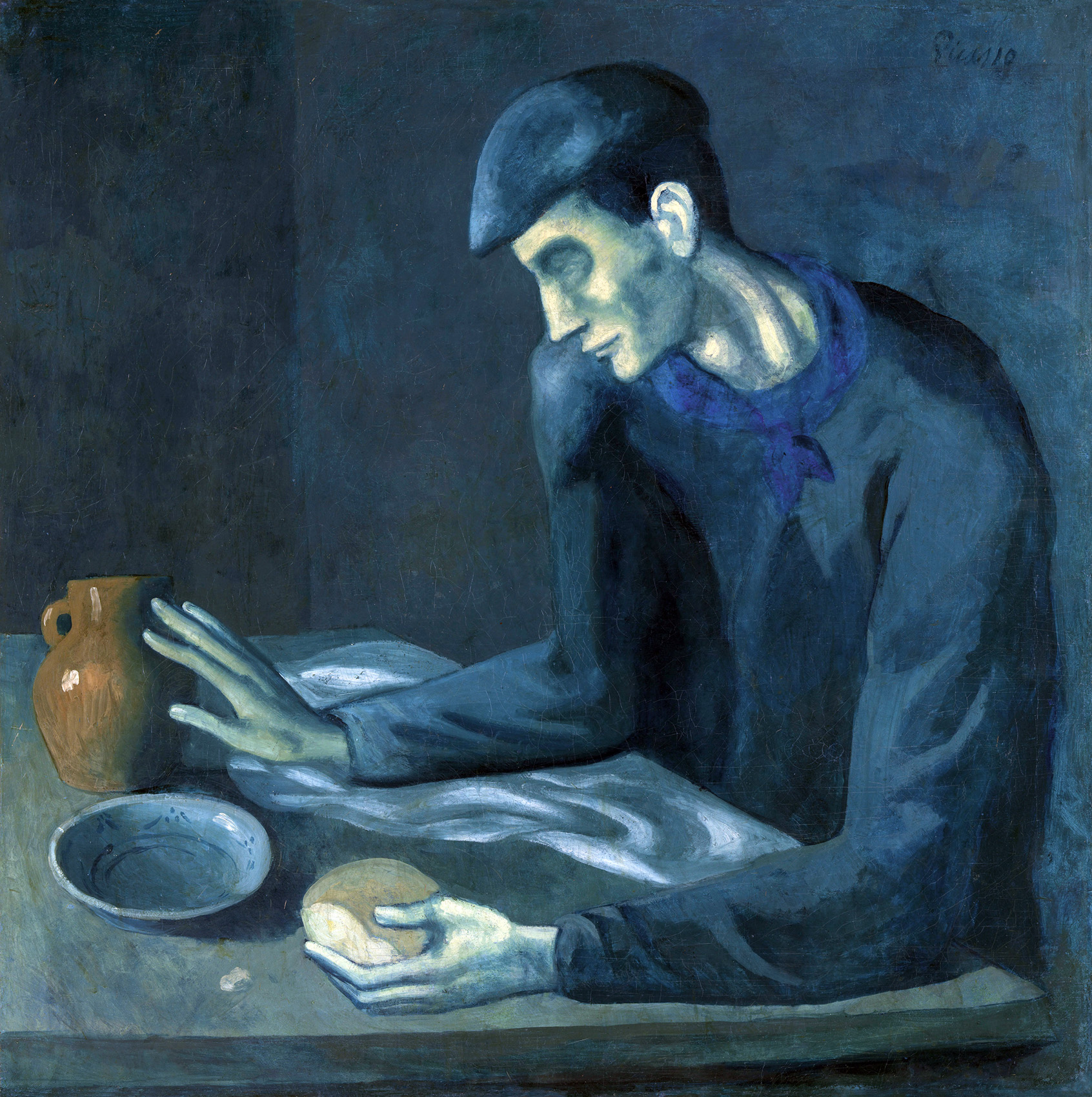
Some people must be wondering why the title Blue Period. It actually refers to a specific moment of Pablo Picasso, called by the experts the blue period. This period is very important in Picasso’s life, despite being extremely brief (1901-1904), in which the artist uses depression (hence the term blue) and art as catharsis to cope with the whole period.
At that time Picasso was only 20, and at 19 he had left Spain for Paris in the company of his friend Carles Casagemas, who had immense love for a woman named Germaine Gargallo. While Pablo was visiting Barcelona, Casagemas publicly declared his love to Germaine in a Paris café and proposed to her. She refused, and Casagemas then shot Germaine and shot himself in the head.
That tragedy was the trigger for Picasso’s Blue Period era with the painting The Burial of Casagemas, a painting that, despite not carrying a large amount of blue, shows morbid colors on the friend’s body, ashen tones and a single strong color in the background.
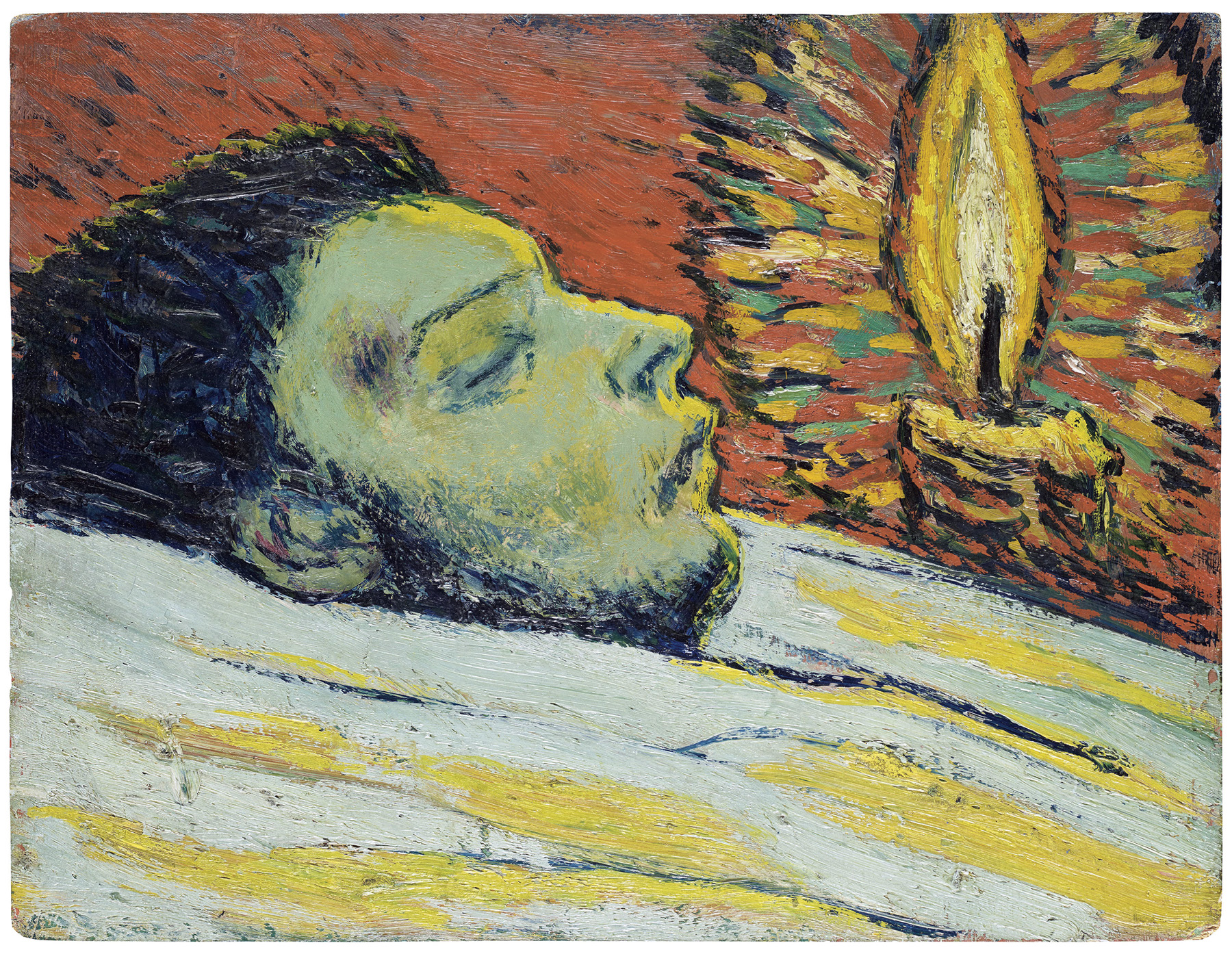
The blue colors would become the great mark of the Blue Period, which addresses things very present in Picasso’s life at the time, like death, aging, poverty, the role of women, and so on.
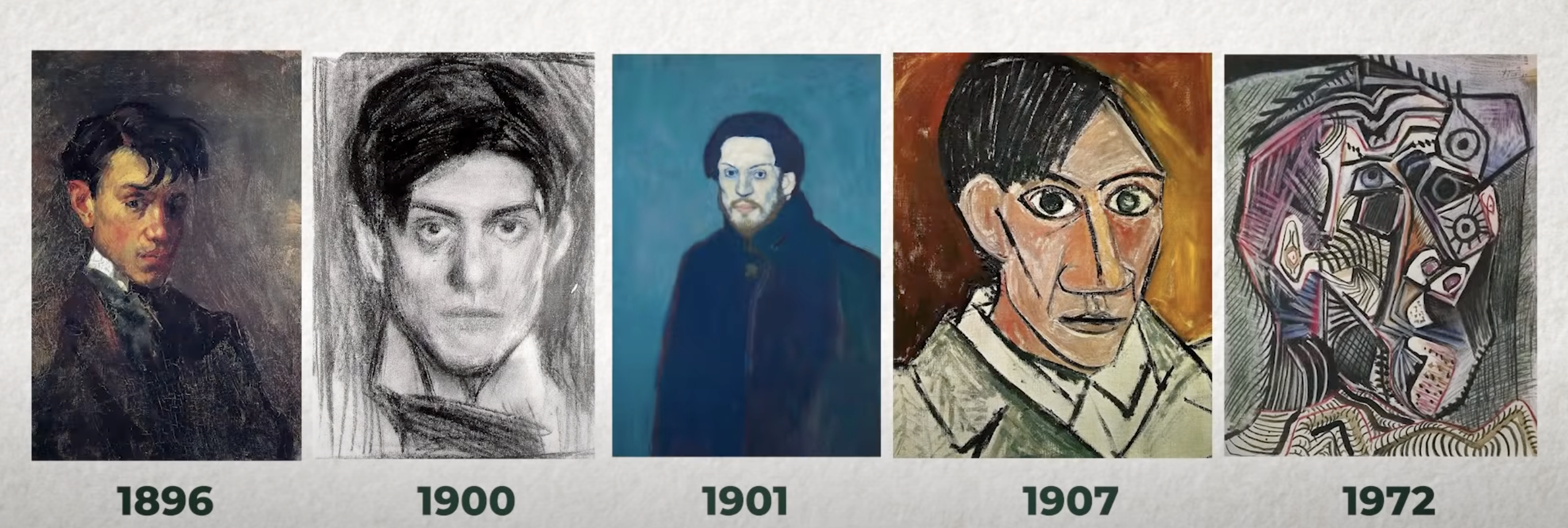
We can even see the differences between Picasso’s periods in their respective self-portraits, and clearly single out the blue period among them.
A new way to look at our careers
Where all of this connects is that, as a Black man from the periphery who has felt the love of making games since he was 5 years old, these three points resonate strongly with my worldview. In a world full of people talking about what to study, how to study, whether to go to college or not, artificial intelligence and, more importantly, doing what you love versus doing what pays, people forget that only they will go through what they have to go through and that, in most cases, everything can be a phase.
Picasso, before becoming the master of cubism and one of the best painters in the world, went through a blue period, among others. Yatora had the goal of getting into a great art school and, to do that, went through several stages, like prep courses, tests, encounters, tutoring, and so on.
To reach their goal of publishing a hit manga that would be adapted into an anime, the Bakuman characters also went through several phases: they learned how the industry works, contests, one-shot stories, being assistants to other authors, publishing a manga, getting cancelled, and so on.
For example, I have the goal of being a game designer one day and, for that, I have gone to college, dropped out, enrolled again, worked as a game store clerk, discovered a love called programming, have been working in the software industry for 7 years, and I keep following the trajectory I know will lead me to making games.
The question, in the end, is: make your own decisions, but understand that you will go through blue periods, you will stray from the path, but you can come back at any time, some harder than others. Always keep your big goal in mind and stay calm. There are no ready-made recipes, and keep in mind that when your goal is reached, it may not be an absolute success, and that is okay.
To finish, I bring a page from the manga that opened this text which illustrates well what I mean: deciding to do what you love does not guarantee fun, but it does not mean you should not do it. Who decides that is you, and it is okay if you decide not to.
I think that, actually, what I learned over these years, and what all these “characters” also learn in a way, is how much being selfish is what guarantees us a path to walk. And when I say selfish, it is not the capitalist way of it, of thinking of yourself above others, but thinking of yourself despite others. It is about having fun painting, programming, making videos, writing or, in the end, following your path.
If you enjoyed it, folks, like and share to show support, and I recommend watching Blue Period. As I said, it is right there on the big red streaming service!
Bibliography
-
Blue Period - Manga
-
Bakuman - Manga